
Best Proactive Sales Tools for Wholesale Distributors
The best proactive sales tools for wholesale distributors help reps act before a customer calls, not after. That means surfacing which accounts are due to reorder from their order history and turning reorder patterns into a ranked call list. General CRMs, ERP reports, and reminder tools each help, but few make proactivity the default.
What makes a sales tool proactive
Proactive selling in distribution means calling a customer before they run low, not answering the phone once they already have. A proactive tool is one that does the noticing for the rep, surfacing the accounts that need a call so the rep spends the day working the list rather than deciding what the list should be.
Several categories of software claim to help. The useful distinction is whether a tool prompts the next move on its own or simply stores what you tell it and waits to be asked. The first pushes work toward the rep; the second waits for the rep to come looking.
Proactive sales tools compared
Each of these earns its place for something. The matrix rates them on how proactive they are for a distributor's core job of getting ahead of customer reorders.
| Capability | Allodial Predict | Generic CRM | ERP report | Task/reminder tool |
|---|---|---|---|---|
| Prompts reps before the customer reaches out | ✓ | ◐ | – | ◐ |
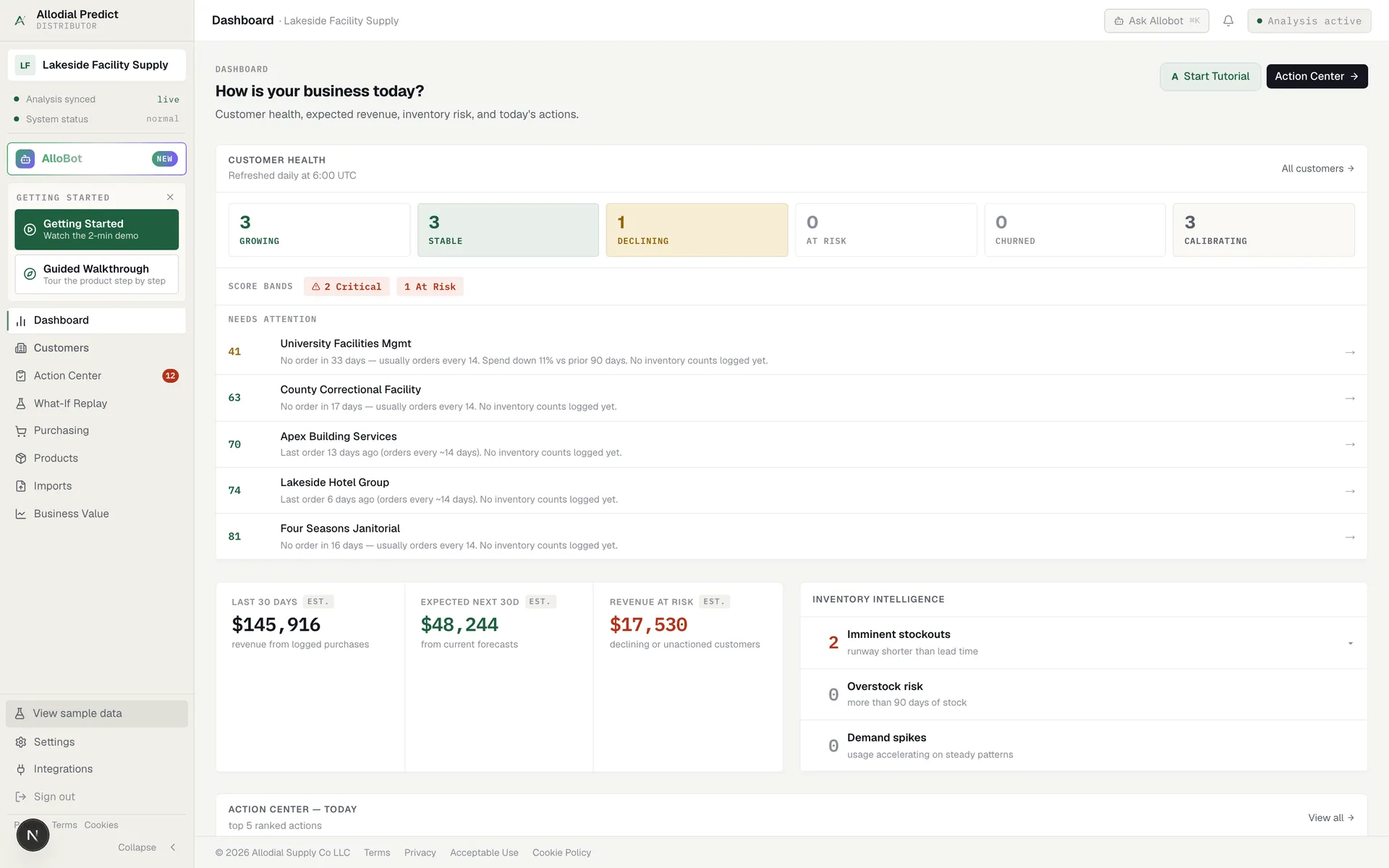
| Flags accounts due to reorder from order history | ✓ | – | ◐ | – |
| Ranked daily call list by revenue and risk | ✓ | ◐ | – | – |
| Tracks follow-up tasks and reminders | ◐ | ✓ | – | ✓ |
| Manages a full sales pipeline and contacts | ◐ | ✓ | ◐ | – |
| Reports on historical orders and revenue | ◐ | ◐ | ✓ | – |
| Needs no manual data entry to work | ✓ | – | ✓ | – |
| Built specifically for distribution reorders | ✓ | – | – | – |
How each type helps
A general CRM makes reps proactive by giving them tasks, reminders, and a place to log every touch. The catch is that the reps have to decide who to chase; the CRM only remembers what they told it.
An ERP report is proactive raw material. It can rank accounts by revenue or flag a drop in order frequency, and a sharp manager can build a call plan from it, though that takes a standing report and someone to read it every week.
A task or reminder tool is proactive by habit. Set a recurring reminder to call an account every six weeks and it will fire, whether or not that account actually needs a call that week.
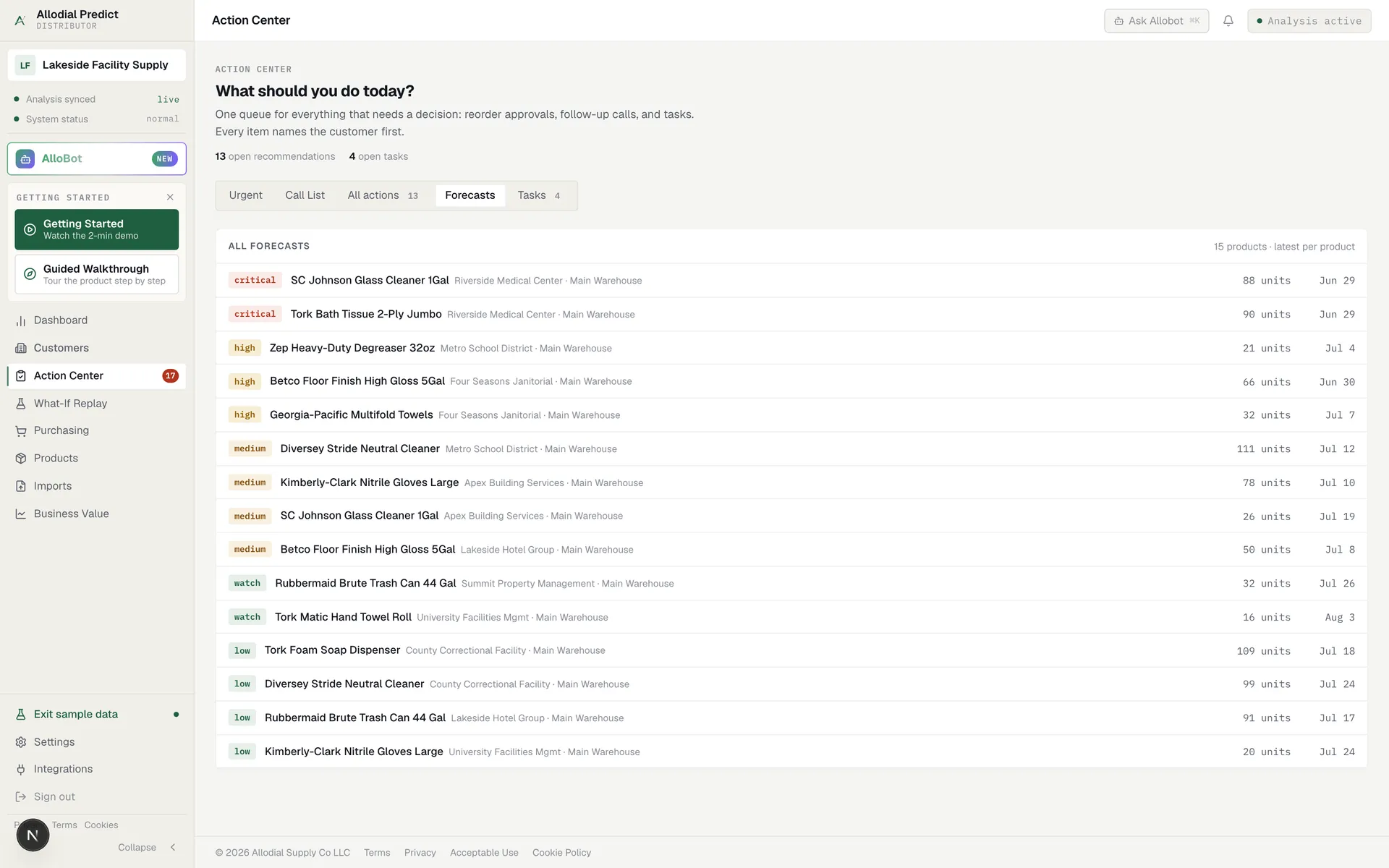
A purpose-built reorder-timing tool is proactive by design: it decides who is due from the order history, and the rep decides how to work the list.
The difference between storing data and prompting action
Most sales tools are strong at storing data and weaker at prompting the next move. A CRM will faithfully hold every order and note, but it will not tell a rep, unprompted, that Keystone Facility Solutions is overdue and worth a call today.
Proactivity means the tool does the noticing, so a rep spends the morning calling rather than deciding who to call. That shift, from lookup to prompt, is what separates a genuinely proactive tool from a well-organized record.
It also changes what proactivity depends on. When the tool prompts, a distracted or busy week does not create a coverage hole, because the accounts due for a call still surface on their own. When proactivity lives only in rep discipline, it fades the moment things get hectic, which is usually exactly when accounts start slipping.
What a purpose-built proactive tool adds
A tool built to make distribution reps proactive adds a few things the general categories do not.
- It reads order history and flags who is due, so nobody has to guess
- It ranks the day so the highest-stakes accounts come first
- It gives a plain reason for each call, ready to use
- It keeps every account in view, not just the ones a rep remembers
Choosing the right mix for your team
Most distributors already own something from these categories, and the answer is rarely to throw it out. Keep the CRM for pipeline, lean on the ERP for reporting, and use reminders for routine follow-up. But if the goal is reps who consistently call before the customer runs low, a purpose-built reorder-timing tool makes proactivity the default instead of a discipline the team has to sustain by hand. The best mix usually keeps what you have for what it does well and adds the reorder layer to supply the one thing none of them does.
What reps actually work from.
Common questions
Isn't a CRM with reminders already a proactive sales tool?
It can be, but only as proactive as the reps who set the reminders. A CRM waits for someone to decide an account needs attention. A reorder-timing tool decides that from the order history itself and ranks the day, so proactivity does not depend on every rep remembering to schedule the next call.
See which accounts are due before the phone rings.
Allodial Predict reads your order history and surfaces the accounts that need a call today.